


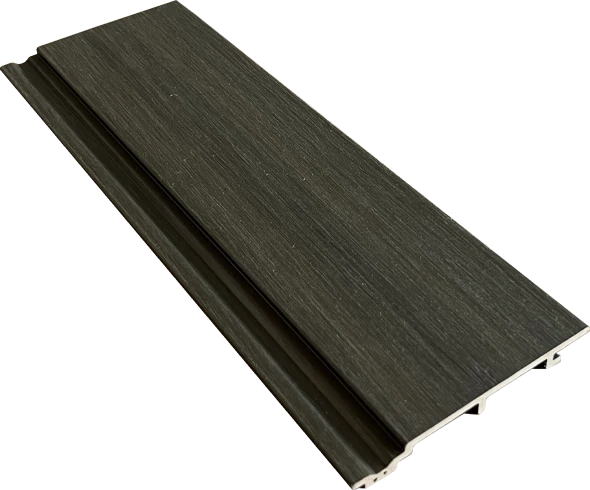


ASA WPC Exterior Wall Panel | Tropical and Subtropical Climate Performance
Why Climate Matters in Cladding Selection
A cladding product rated for outdoor use in a temperate Northern European climate is not automatically suited to a building in Southeast Asia, Queensland, Florida, or the Middle East. The weathering stresses are categorically different.
In tropical and subtropical environments, exterior cladding faces a combination of conditions that accelerates degradation in materials not specifically engineered for them:
UV index: equatorial and near-equatorial locations receive UV radiation intensities that can be two to three times higher than Northern European averages. Materials that hold up adequately under moderate UV degrade visibly faster under sustained tropical sun.
Rainfall volume and frequency: monsoon-season rainfall totals and frequency far exceed temperate norms. Driving rain at high velocity tests panel edge sealing, joint integrity, and core moisture resistance under repeated wet-dry cycling.
Ambient temperature and humidity: year-round elevated temperatures combined with high relative humidity create sustained thermal and moisture load on wall materials - without the winter dormancy period that temperate climates provide.
Biological growth: warm, humid conditions promote algae, mould, and mildew growth on exterior surfaces - particularly on porous or organically-based materials.
This panel addresses each of these failure drivers by design.

Performance Against Tropical Failure Modes
UV degradation: the ASA surface layer provides UV stability through polymer chemistry, not additive packages. Under sustained tropical UV, the surface retains its color and texture without the chalking, fading, or surface embrittlement that affects PE-surfaced WPC and painted timber within five to eight years in high-UV locations.
Moisture intrusion: the WPC composite core is a closed-cell structure. There are no capillary pathways for liquid water or vapour to enter the panel body under driving rain or sustained humidity exposure. No swelling. No delamination at edges. No joint opening from moisture-driven dimensional change.
Biological growth resistance: the ASA surface is chemically inert and non-porous. It does not provide the organic substrate or surface texture that supports algae and mould colonisation. Routine cleaning with water removes surface deposits without chemical treatment.
Thermal cycling: tropical day-night temperature differentials and seasonal temperature variation produce dimensional movement in panel materials. The hidden fastener clip system accommodates axial thermal movement in each board without transmitting stress to adjacent panels or subframe fixings.

Panel Construction
ASA surface (dual face): co-extruded simultaneously with the panel body. UV-stable acrylonitrile styrene acrylate - no coating to wear, no laminate to peel, no additive package to deplete. Chemically resistant to tropical atmospheric conditions including salt air in coastal locations.
WPC composite core: wood fiber, HDPE, and performance additives. Moisture-stable, structurally rigid, and dimensionally consistent across the temperature and humidity range of tropical outdoor environments.
Reinforced hollow section geometry: reduces panel mass per linear metre while maintaining structural performance under wind loading from tropical storm events.

Technical Specifications
Core material: wood fiber + HDPE + additives + ASA co-extruded layer
Surface: dual-face ASA co-extrusion
Fire rating: B1
Outdoor service life: 30 years
UV resistance: inherent to ASA polymer - no depletion over time
Moisture resistance: zero absorption at face and core
Biological resistance: non-porous ASA surface, no organic substrate
Thermal movement: managed by hidden fastener clip system
Environmental: eco-friendly, recyclable
Certifications: CE, ISO 9001, ISO 14001, SGS
Profile range:
120 × 12 mm
Standard lengths: 2.9 m / 3.0 m - custom lengths available

Tropical and Subtropical Project Applications
Residential villas and housing in Southeast Asia, Australia, the Caribbean, and tropical Africa
Resort and hospitality buildings in beach and island locations
Commercial buildings in high-UV urban environments across the Middle East and Southern USA
Agricultural and industrial buildings in high-humidity equatorial locations
Coastal and waterfront structures across all tropical markets

Installation in Tropical Conditions
Hidden fastener clips manage thermal movement without face penetrations. No exposed metal at the panel face to corrode in salt-air coastal environments. Stainless steel subframe fixings recommended for marine-adjacent locations. Panels cut cleanly on site with standard equipment. Aluminium subframe rail preferred in high-humidity locations for corrosion resistance.

Manufacturer and Supply
EvokeWPC - Shandong Yulin New Decoration Materials Co., Ltd.
Established: 2013
Certifications: CE, ISO 9001, ISO 14001, SGS
Fire rating: B1 - all profiles
Warranty: 30 years outdoor
Export: 90+ countries including active supply across Southeast Asia, Australia, and the Middle East
OEM: custom color, profile, length, private-label available
Request tropical climate test data, sample profiles, or project pricing via the contact form.
Hot Tags: asa wpc exterior cladding tropical climate tested, China asa wpc exterior cladding tropical climate tested manufacturers


